
Classic brand models assume the organisation controls the brand. The Relational Brand Model starts from a different premise: fans build the brand. The organisation creates the conditions.
By Dr. Ralph Scherzer — Brand & Story
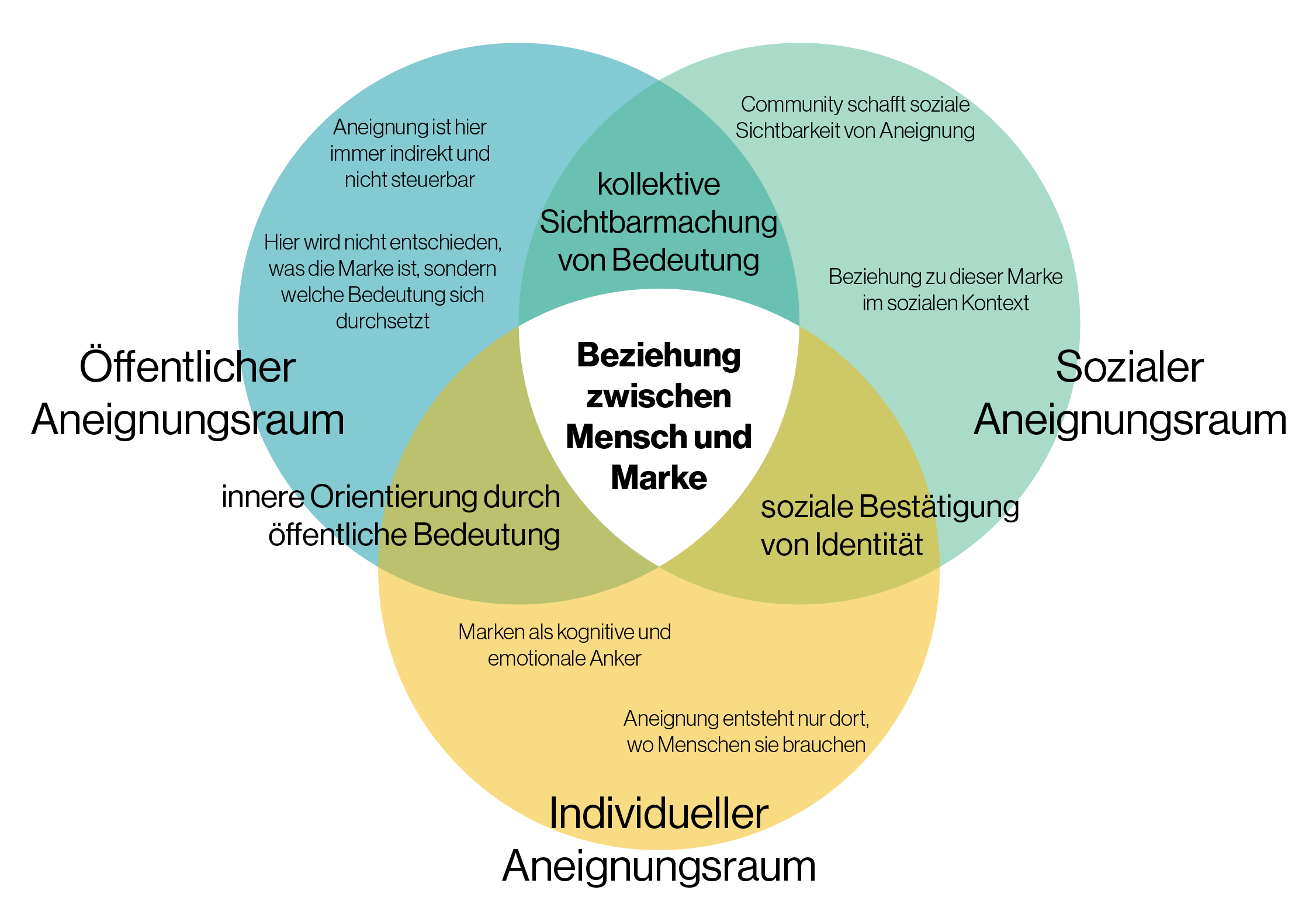
Every classic brand model — from Kapferer to Aaker — places the organisation at the centre. The brand is defined, managed, communicated. Consumers receive it.
This model worked when media was one-directional. It does not work when fans can talk back, create content, reinterpret meaning and carry narratives further than any media budget can reach.
The Relational Brand Model recognises this shift. Brands are not built through communication — they are built through appropriation: the process by which fans make a brand their own.
Appropriation happens when a fan does not just consume a brand — but interprets it, adapts it, carries it forward. The fan who names their fantasy team after a rider. The supporter who creates artwork. The community that develops its own language and rituals around a club.
These are not edge cases. In sport, appropriation is the default mode of fan engagement. The question is not whether it happens — it is whether the organisation has the infrastructure to enable, channel and build on it.
„No football club builds its brand. Fans build it. The task of the organisation is to create the conditions for appropriation — and to have the infrastructure to turn that appropriation into owned relationships.“
— Dr. Ralph Scherzer, Brand & Story
Narrative foundation. Content that creates spaces for appropriation — not content that simply communicates brand messages.
The infrastructure that enables appropriation to happen — and captures it as First-Party Data. Identity Layer, fan profiles, digital touchpoints.
Turning appropriation into measurable business outcomes. D2C, membership, sponsorship activation — all built on the relationship, not on reach.
The Relational Brand Model is the theoretical foundation of the Fan Relationship System. It explains why a data strategy alone is not enough — why the Identity Layer must be paired with content that earns registration, not just demands it.
When fans appropriate a brand, they invest emotionally. That investment is the most durable form of loyalty — and the most valuable foundation for commercial activation. The organisation’s job is to create the conditions, then capture and build on what fans create.
Interested in how the Relational Brand Model connects to your fan strategy?