
The Fan Relationship System did not emerge from technical infrastructure alone. It emerged from an understanding of how brands really emerge —
and why classic brand theory systematically falls short in the digital fan economy.
Traditional brand models assume that companies build brands —
through communication, design, positioning.
The Relational Brand Model reverses this logic:
Brands emerge through appropriation.
Fans make a brand their own — they interpret, adapt, carry it forward.
The organisation creates spaces for appropriation, but the actual brand emerges
in the minds and behaviour of the audience.
For sport, this insight is fundamental: No football club “builds” its brand.
Fans build it. The task of the organization: create optimal conditions for appropriation —
and systematically generate value from it.
This is exactly the logic hinter Layer 04 (Content & Engagement) im
Fan Relationship System:
Content creates spaces for appropriation. Appropriation deepens the relationship.
Relationship enables value creation.
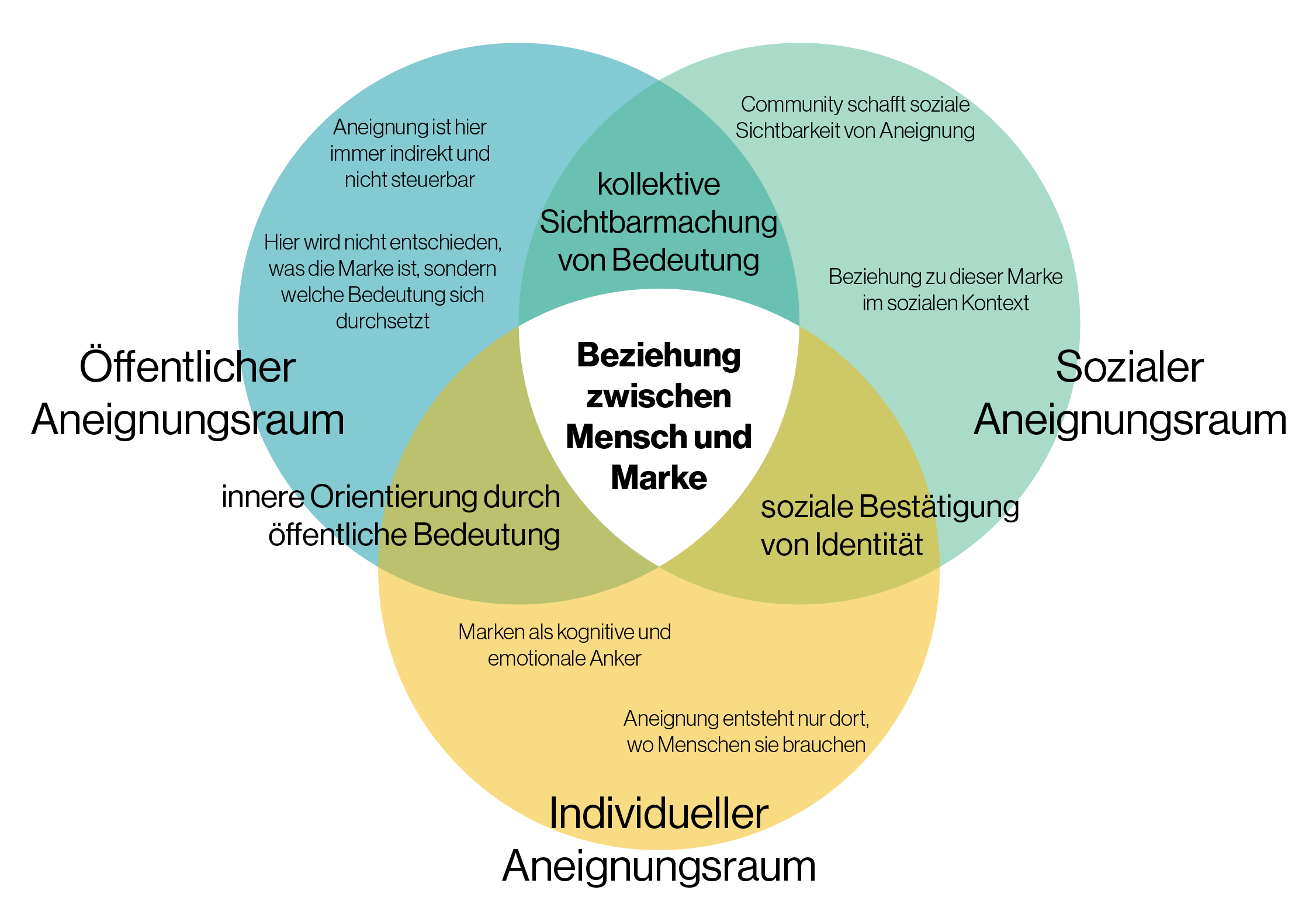
The Relational Appropriation and Orientation Model of the Brand
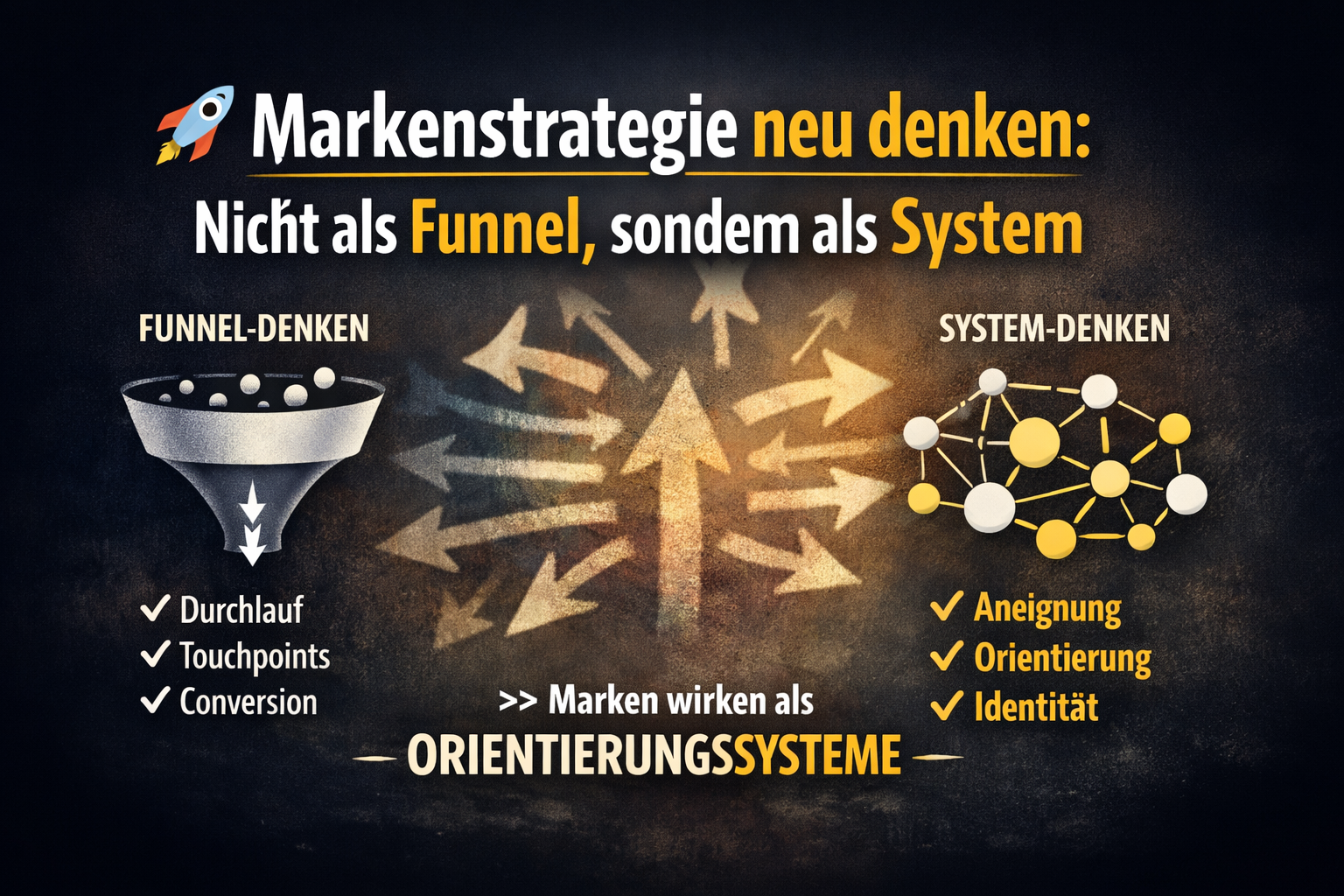
Illustration of Systemic Brand Strategy
Classic brand consulting thinks in silos: brand here, digital there, content elsewhere, performance on the margins.
Systemic Brand Strategy thinks in interconnections — and in emergent effects.
Every decision influences all other elements of the system:
Identity influences data quality. Data quality influences engagement.
Engagement influences Monetization. Monetization influences Sponsorship.
Sponsoring influences Brand Awareness.
The Fan Relationship System is the operational implementation of systemic brand thinking
in the sport context: seven layers that work together —
not seven separate projects.
How the two thinking models translate directly into the 7 layers of the Fan Relationship System:
| Thinking model | Principle | FRS Layer |
|---|---|---|
| Relational Brand Model | creating spaces for appropriation | Layer 04: Content & Engagement |
| Systemic Brand Strategy | Identity as brand foundation | Layer 01: Identity Layer |
| Systemic Brand Strategy | Data as a brand signal | Layer 02: First-Party Data |
| Relational Brand Model | Relationship before transaction | Layer 05: Monetization |
| Systemic Brand Strategy | Measurable proof as trust foundation | Layer 06: Sponsorship Activation |
| Systemic Brand Strategy | System must run internally | Layer 07: Operating Model |
The Fan Relationship System creates the infrastructure where appropriation happens: Platforms, content, membership — all spaces where fans make the brand their own. OFR emerge where appropriation is structurally enabled.
Anyanyone who treats brand, fan data, content and monetisation as separate, optimises Silos. Systemic Brand Strategy verbindet diese Ebenen — and generates emergent impact that no silo achieves alone.
First-Party Data is not just a revenue asset — it is a brand signal. What fans buy, click, share, shows where appropriation is happening. And where it isn’t yet.
The Relational Brand Model explains why Membership-Modelle funktionieren: not because of the offer, but because of the relationship logic behind it. Transaction follows relationship — nie umgekehrt.
These thinking models are not academic decoration — they are the foundation of every Brand & Story mandate.
Further reading