
Thinking on fan ecosystems,
sport digital and brand strategy.
No generic content marketing. These are working notes — on digital architecture,
Owned Fan Relationships and what actually moves the needle in sports organisations.
Written from the inside, not the sidelines.
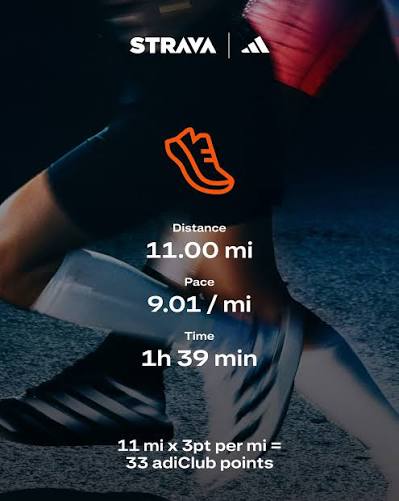
Why adidas Rewards Runs on Strava
adidas rewards activity on Strava while running its own training app. What sports brands can learn about useful apps, partnerships and customer relationships.
Credit: Adidas Instagram
Read more →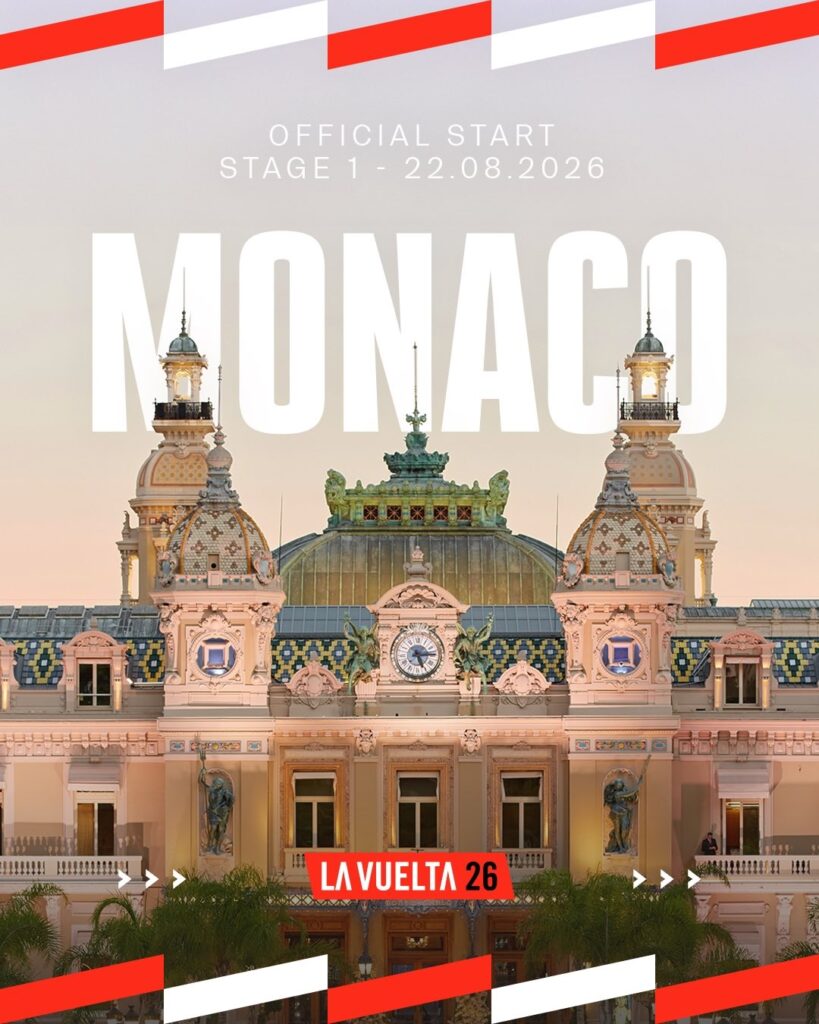
Monaco Does Not Need More Exposure. So Why Is It Hosting La Vuelta?
Israel, Utrecht and Monaco show what Grand Depart hosts buy, organisers sell and cycling teams must ultimately deliver.
Read more →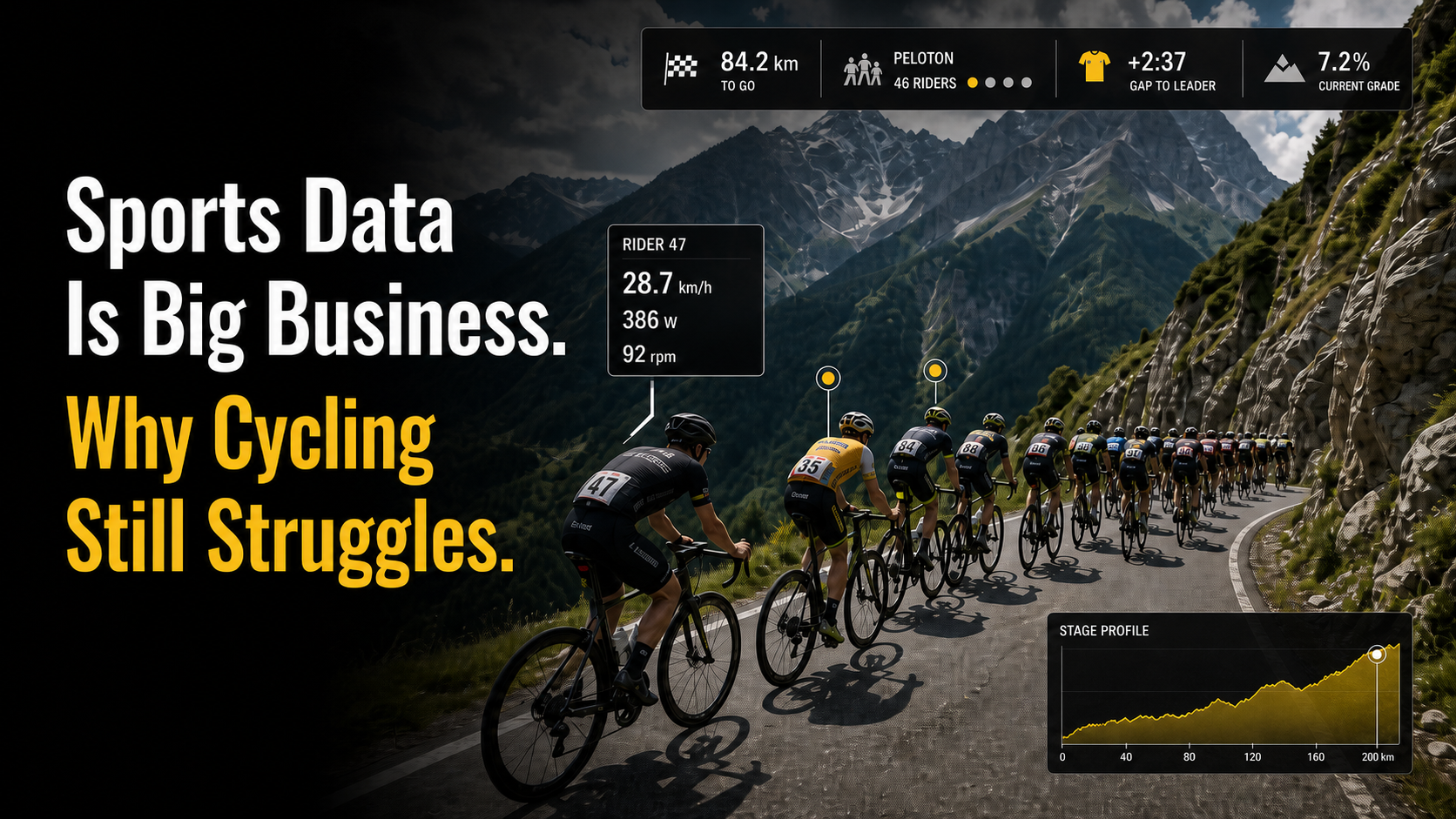
Sports Data Is Big Business. Why Cycling Still Struggles.
Velon proves live rider data works. Cycling still lacks a dependable season product that broadcasters, fans and sponsors can learn, use and buy repeatedly.
Read more →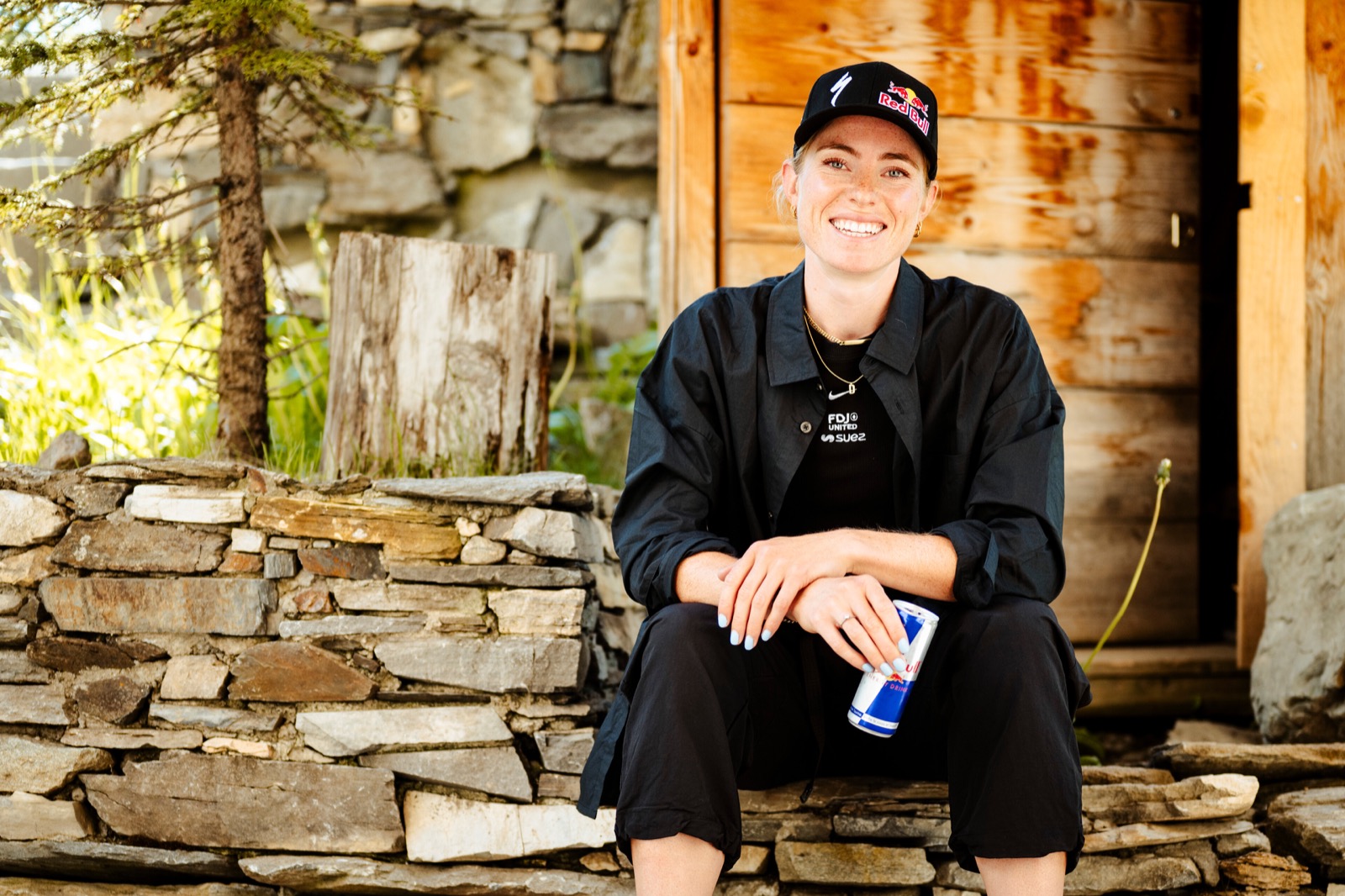
Red Bull FDJ: Access, Not Ownership, May Be the Strategy.
Red Bull’s FDJ UNITED-SUEZ partnership looks smaller than a takeover and more strategic than a helmet deal. That may be exactly why it matters.
Read more →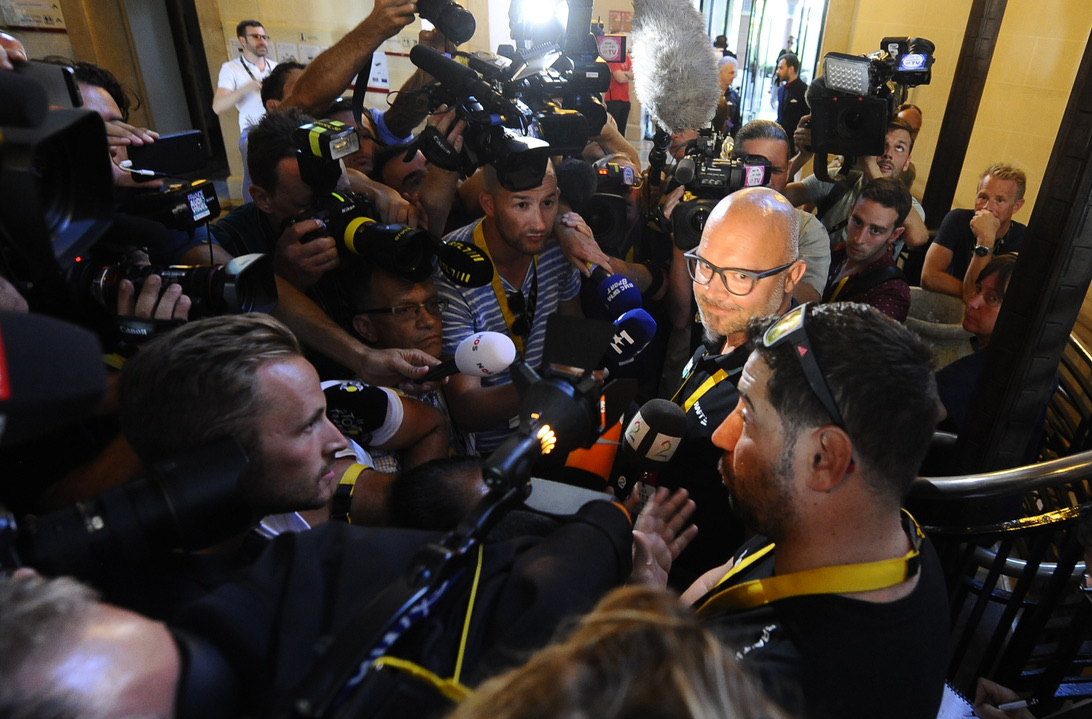
The Tour de France Is Full of Emotion. AI Can Help More Fans Understand It.
Inside My Race points to a useful role for AI in sport: helping fans understand complexity without manufacturing the emotion that makes the event matter.
Read more →
A Fan Can Be Reachable Everywhere and Owned Nowhere.
Sport has more fan touchpoints than ever. Relationship continuity shows where fan access, identity, service, venue utility and trust break.
Read more →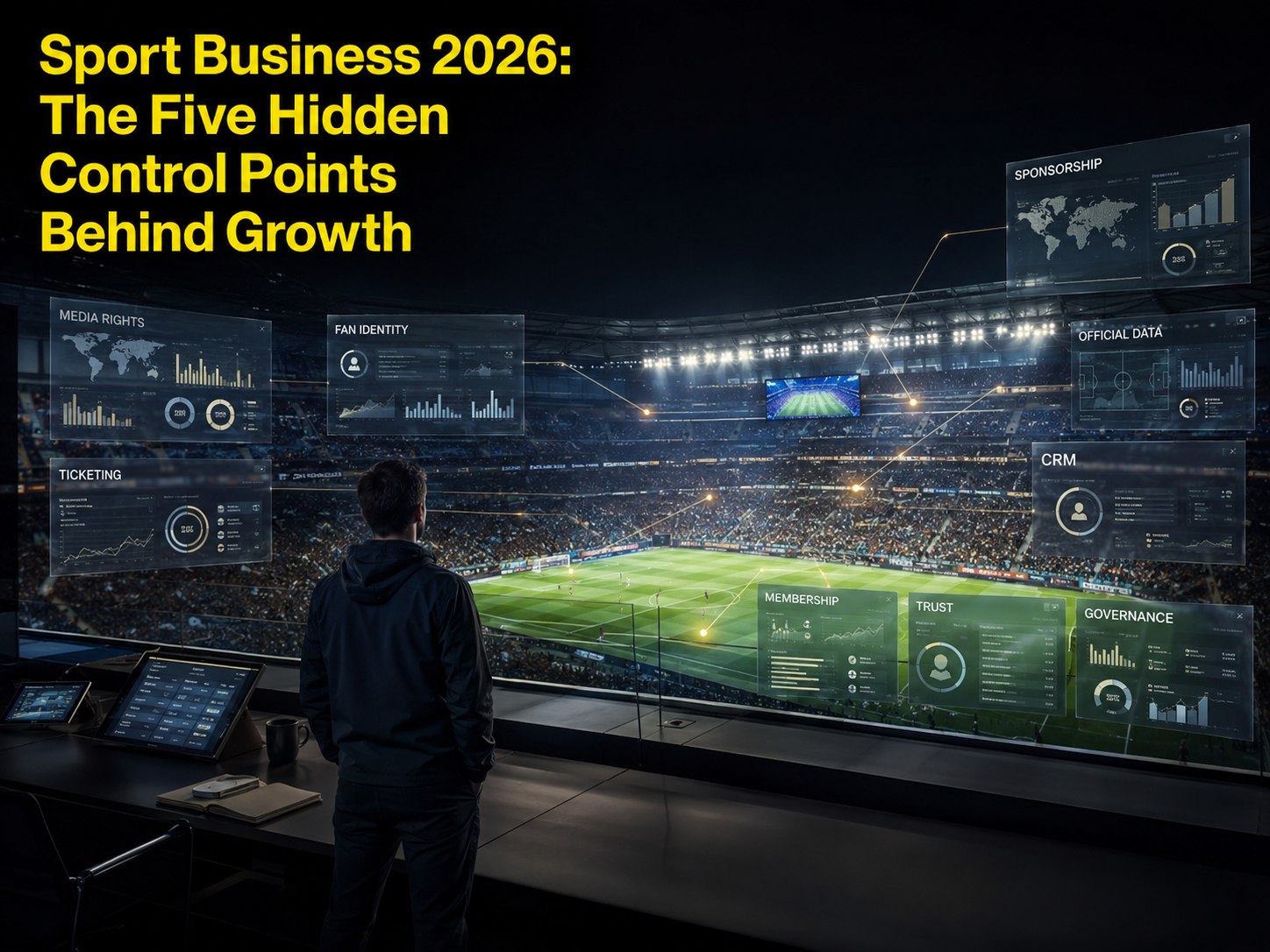
Sport Business 2026: The Five Hidden Control Points Behind Growth.
Sport business growth is visible. The strategic question is who controls the layers behind demand: media rights, identity, ticketing, data, trust and athlete economics.
Read more →
AI Search Visibility Starts Outside Your Website.
AI search visibility depends on product data, partner content, source authority and ecosystem consistency, not only the brand website.
Read more →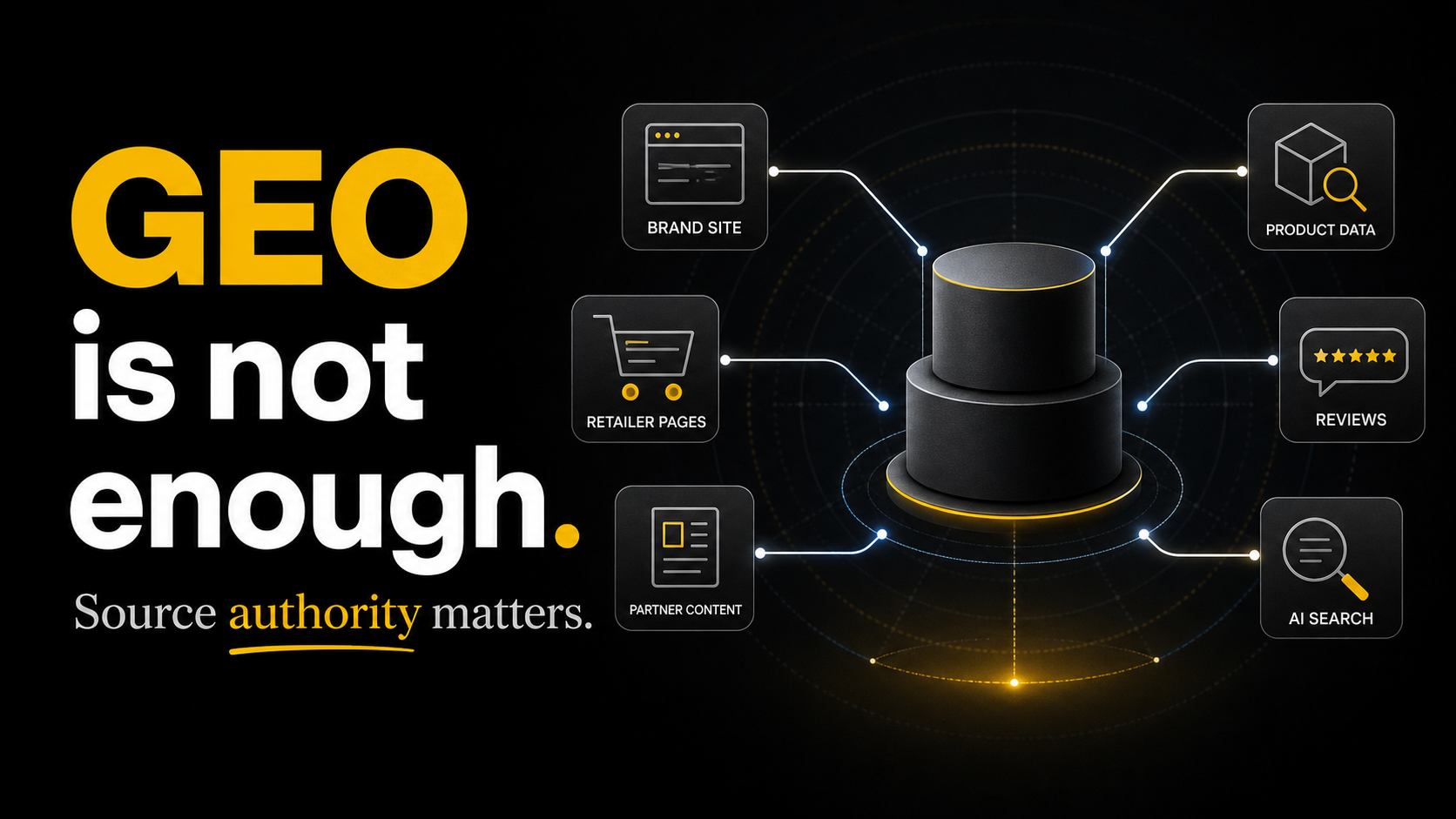
Generative Engine Optimization Is Not Enough for Product Brands.
GEO is useful language. But product brands need source authority, structured product data and partner-content governance for AI search visibility.
Read more →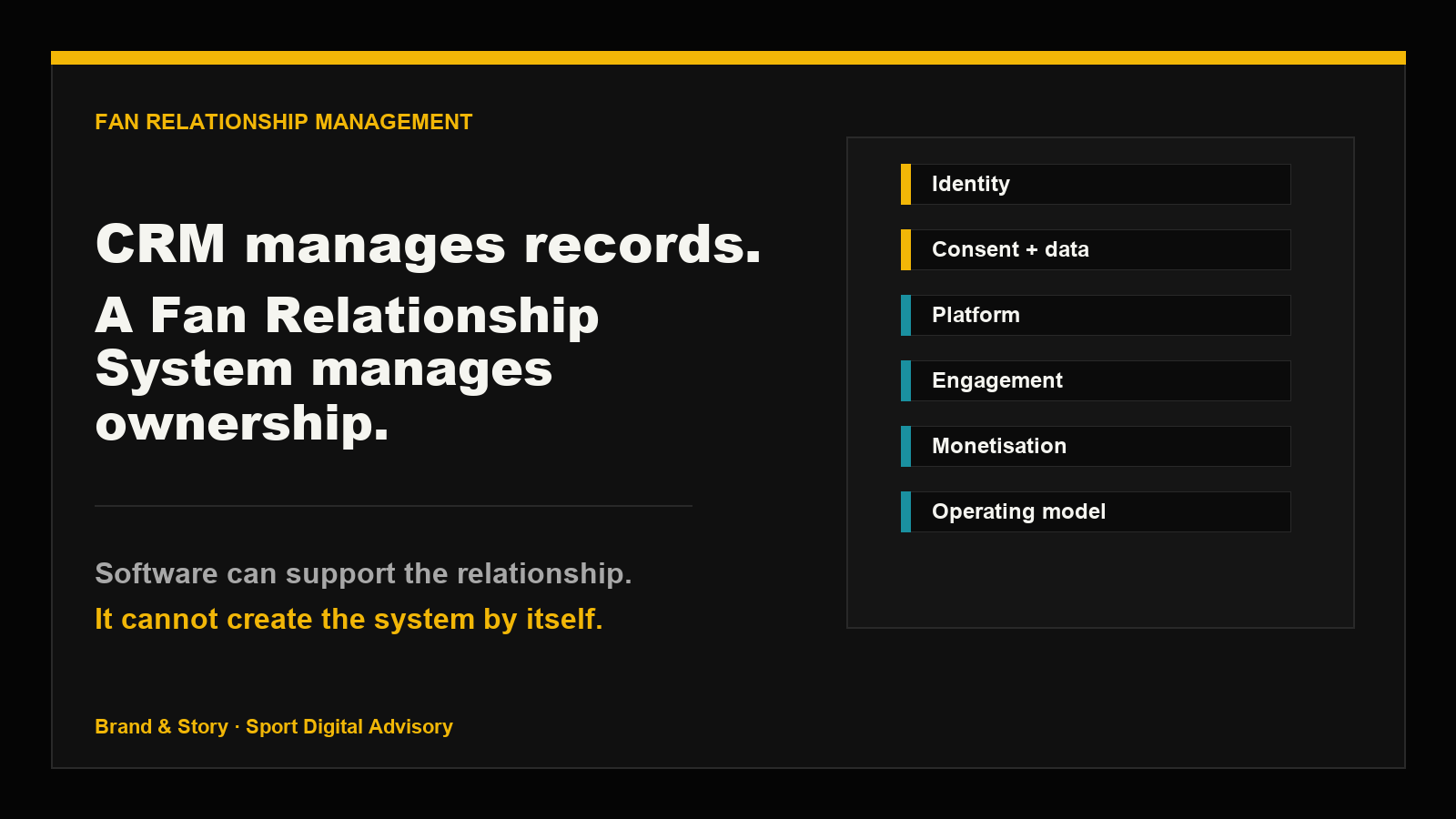
Fan Relationship Management in Sport: The System Behind Owned Fans.
Fan relationship management is more than CRM. It is the system of identity, data, platform and operating model behind owned fan relationships.
Read more →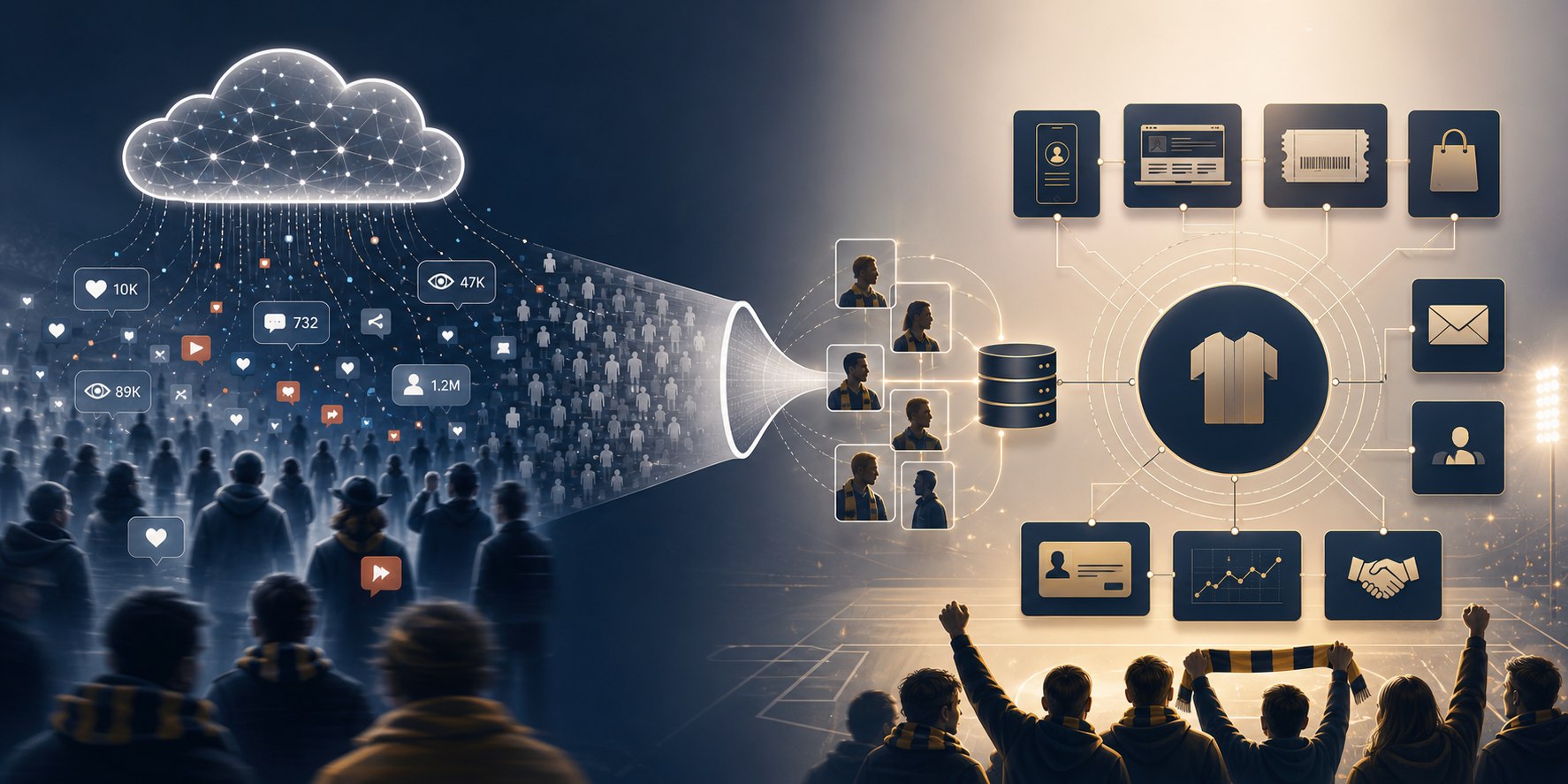
Owned Fan Relationships: Why Fan Engagement Is the Wrong Goal.
Fan engagement is measurable, visible, and almost entirely irrelevant to commercial outcomes. Here is what sports organisations should be optimising for instead.
Read more →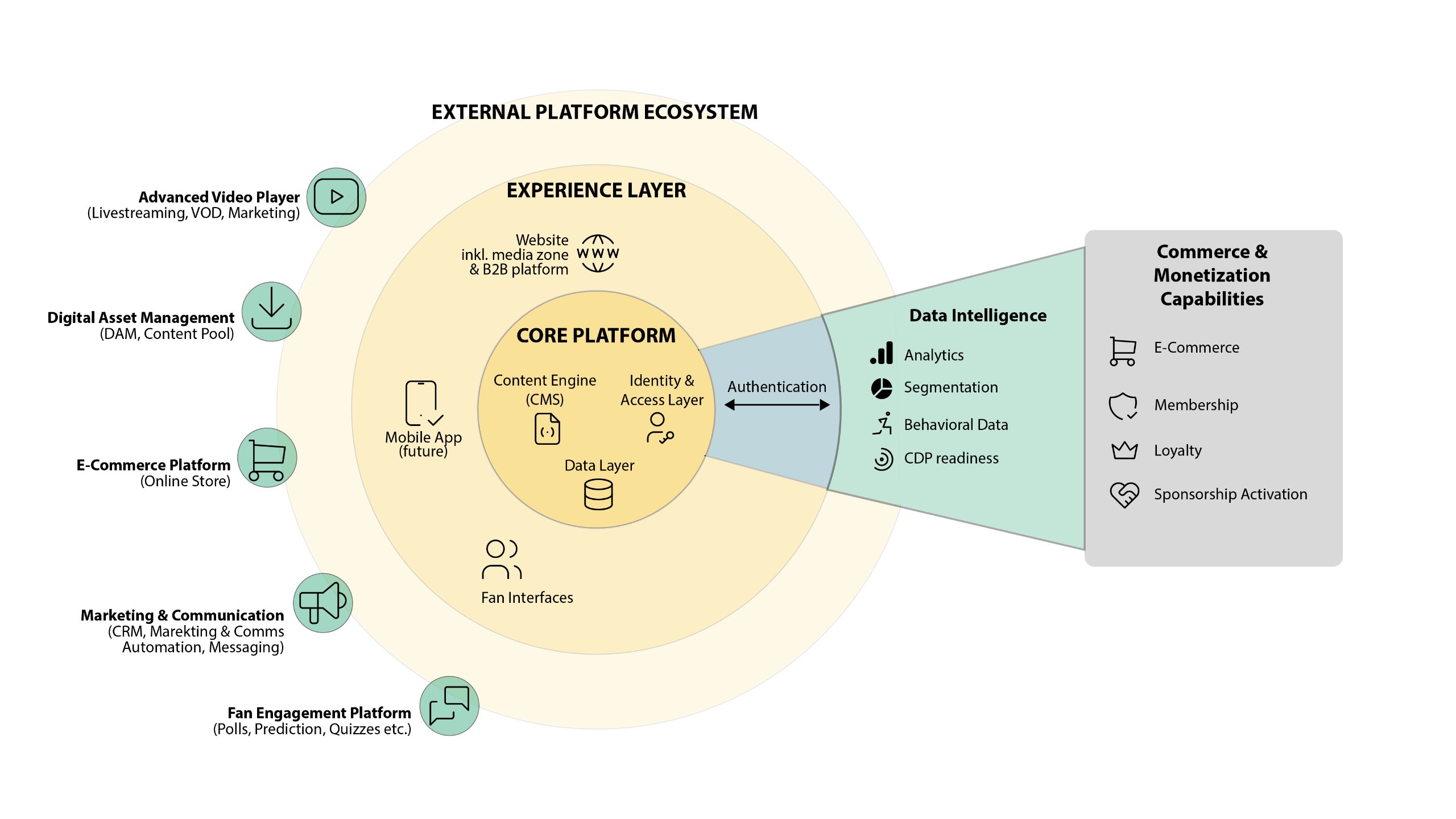
What is a Sport Digital Ecosystem? Definition, architecture and why it matters.
A sport digital ecosystem connects fan data, content, commerce and sponsorship in one integrated infrastructure — direct, without algorithms as intermediaries.
Read more →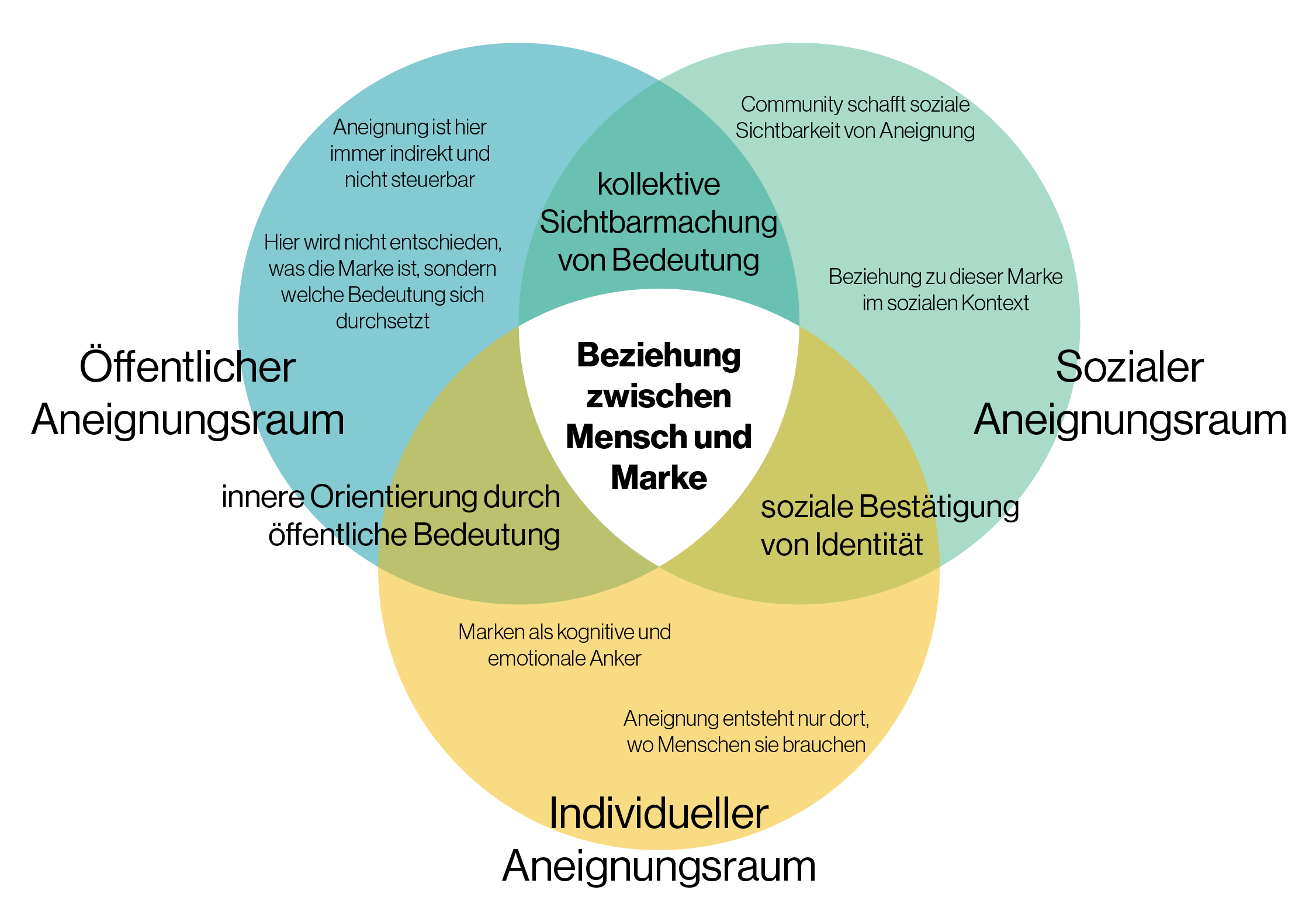
The Relational Brand Model: why fan appropriation is the strongest form of brand building.
Classic brand models assume the organisation controls the brand. The Relational Brand Model starts from a different premise: fans build the brand.
Read more →
Sport Digital Consultant vs Agency: when to choose which.
Agencies deliver campaigns with deadlines. Consultants build systems without expiry dates. Here’s how to decide which you actually need.
Read more →
The 3 most common mistakes in sport digital transformation.
Platform first. Content first. Data later. All three are the same wrong sequence — and all three produce the same expensive result.
Read more →
What to expect from a sport digital advisory engagement.
Week by week: what actually happens, what gets built, and what you own at the end of an advisory engagement with Brand & Story.
Read more →
Sport digital infrastructure: a self-assessment for executives.
7 questions that reveal whether your organisation has a fan infrastructure — or just a collection of tools that look like one.
Read more →
Owned audience strategy for entertainment brands: what sport taught us.
Sport built the owned-audience blueprint. Entertainment brands that copy the model will own the next decade of direct audience relationships.
Read more →
First-party data for media companies: beyond paywalls.
Paywalls collect payment data. Owned audience strategy collects relationship data. The difference determines the commercial ceiling of your business.
Read more →
Fan loyalty vs brand loyalty: why audience ownership changes everything.
Brand loyalty is acquired. Fan loyalty is appropriated. The distinction changes how you build your infrastructure — and what it can commercially deliver.
Read more →
eSports and owned fan relationships: what gaming gets right.
eSports perfected the owned fan relationship model. Here’s what traditional sport organisations and brands can take from gaming’s architecture.
Read more →What is a Fan Relationship System? The complete guide for sports organisations.
Definition, 7-layer architecture, implementation phases, and what a functioning system actually delivers.
Read more →Fan Relationship System vs. CRM vs. CDP: what sports organisations actually need.
CRM, CDP, and Fan Relationship System are not the same thing. Understanding the difference determines whether you build a data asset or just a database.
Read more →Owned fan relationships: why engagement is not enough.
Likes, views, and follower counts are not business assets. Owned fan relationships are. Here’s what it takes to make the shift.
Read more →Systemic Brand Strategy: why classic brand consulting no longer works
Classic brand consulting thinks in silos. Brand here, digital there, content elsewhere, performance on the margins. Systemic brand thinking connects all of these — and treats brand as a living system, not a static asset.
Read more →- Owned Fan Relationships
- Digital Ecosystem Architecture
- First-Party Data Strategy
- Fan Monetization & D2C
- Sponsorship Activation
About the author
Dr. Ralph Scherzer writes from 20+ years at the intersection of professional sport, brand strategy and digital infrastructure — as an athlete, as Communications Director of a UCI WorldTour team, and as Digital Product Director of a top sports league.
Full profile →Want to talk about your fan ecosystem?
30 minutes. No pitch. An honest conversation about whether this is the right fit.
Book an intro call →