
No to FIFA, Yes to Cycling: Montréal’s Different Route to 2026
On this page
A bigger event is not automatically a better deal for its host. Montréal 2026 raises a question for cities and sponsors: what can a cycling championship help them build beyond race week?
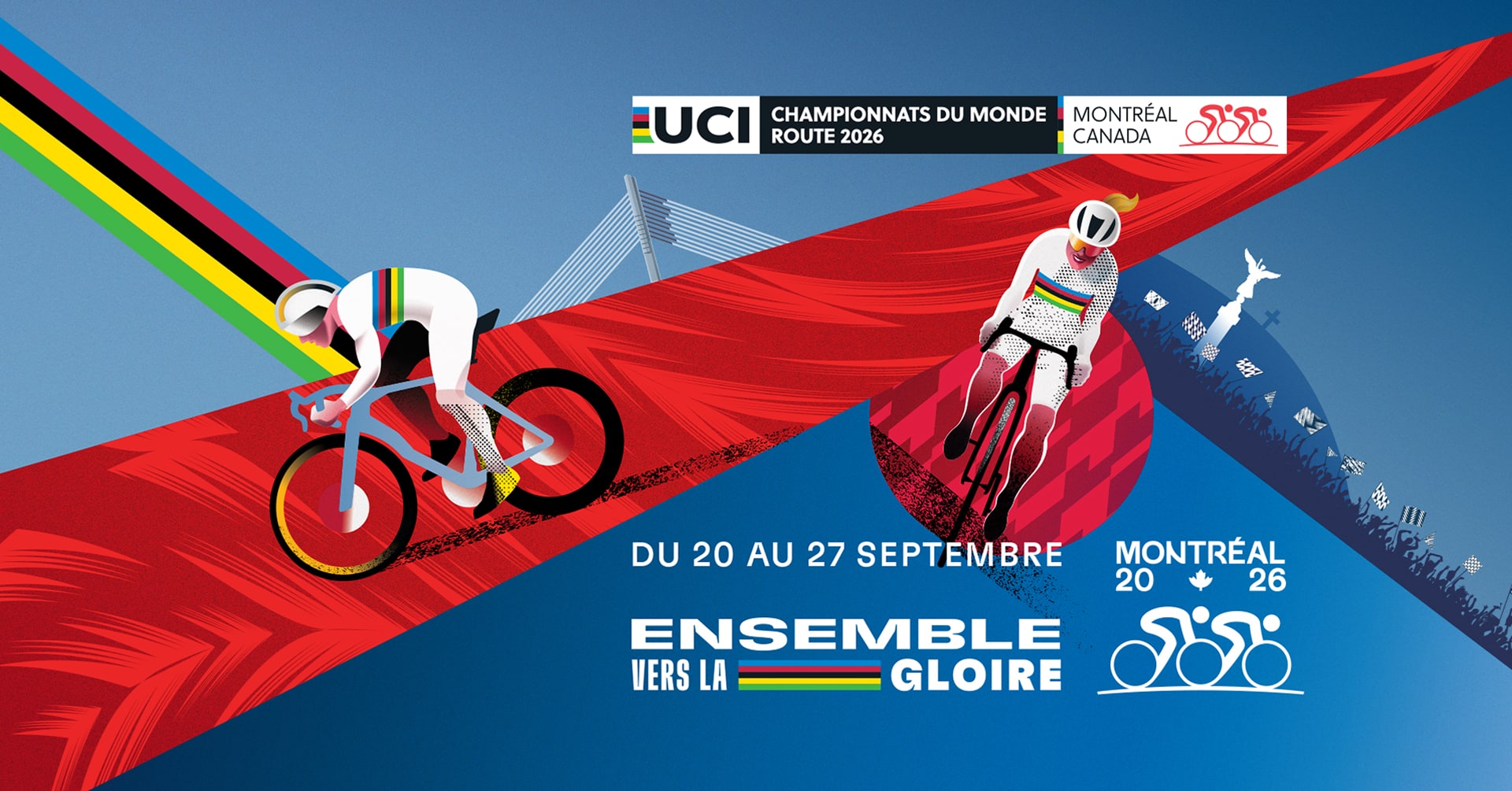
Montréal withdrew from the race to host FIFA World Cup matches in July 2021. Five years later, the Canadian city is hosting the 2026 UCI Road World Championships, from 20 to 27 September. Global prestige did not make the football bid financially workable. Cycling offered a different proposal, with years of local racing behind it.
Québec had withdrawn its financial support for the FIFA bid. Montréal explored alternatives with its partners, then concluded that the resulting funding gap prevented it from continuing. That is the explanation in the city’s original withdrawal announcement.
The cycling proposal had experienced organisers, an established annual race and a sport embedded in everyday city life. Those foundations also matter to sponsors. A championship can bring attention to races, services and participation opportunities that people can return to. The strategic question is whether organisers and partners build a useful path from the event to those experiences.
The cycling bid had a head start
In Matilda Price’s reporting for Cyclingnews, Montréal 2026 general manager Joseph Limare describes a World Championships project that had been developing for years. By his account, the bid was ready when the FIFA opportunity fell away and reached the mayor’s desk almost immediately afterwards.
The proposal came from people already responsible for the Grands Prix Cyclistes de Québec et de Montréal, which began in 2010. The Canadian government’s funding announcement confirms that continuity, along with the UCI’s award of the championships in September 2022. By then, the organisers had more than a decade of history with the annual races.
Delivering a world championship is a significant step up. Montréal could assess that challenge against an organisation’s record of putting elite racing on its streets. The bid had an operating history behind it.
Montréal 2026: a sport with a life beyond race week
Montréal’s cycling base extends beyond professional racing. The UCI’s 2023 profile of the city describes the protected Réseau express vélo network and BIXI bike sharing. Both were part of the city before the 2026 championships arrived.
Spectators are watching elite riders in a city where cycling already has public infrastructure, services and established habits. A sports event legacy can build on those existing services: they give people reasons to keep riding after the medals have been awarded.
There is also a specific legacy proposal to watch. In its September 2026 legacy profile, the UCI points to a planned BIXI mega-station near Université de Montréal. Its eventual contribution should be judged by whether it opens, improves access and serves everyday journeys.
The city still carries the event
Cycling’s local roots do not make hosting effortless. Canada announced CAD 13 million in federal support for the championships in 2023. That figure is one government’s contribution, not the event’s total budget, and cannot support a cost comparison with the abandoned FIFA bid.
The demands also extend beyond money. Montréal’s public information on disruption describes 13 races across seven boroughs and Westmount. It lists a vehicle closure on Avenue du Parc at the main event site from 4 September to 4 October, including installation and dismantling. Eight days of racing therefore sit inside a longer period of preparation and disruption at that location.
Those details belong in the assessment of an event’s fit. Residents experience a championship through access to their streets and neighbourhoods as well as through the spectacle. A credible hosting case needs to account for both.
Free to watch, with reasons to register
According to the official FAQ, general admission is free and spectators do not need a ticket. The Fan Village is also open without an admission charge. Simply watching from the roadside therefore creates no required ticket transaction through which the organiser learns who a spectator is.
Interested spectators have several ways to stay in contact. The event’s website newsletter form requests an email address and presents separate choices for communications from Montréal 2026 and its partners, and from the UCI and its partners. A pre-event competition, which closed in July, requested a name and email address, with a separate choice to receive Montréal 2026 marketing messages.
Other offers provide a reason to register through participation or a more comfortable viewing experience. The registration page for the Rando Vélo Beneva, scheduled for 19 September, describes participant bibs and lists the ride as sold out. Grandstand seats have a separate booking route through Weezevent. These routes reach different groups. Subscriber, participant and ticket buyer are useful distinctions; none represents the entire roadside audience.
The strategic opportunity is to preserve the accessibility of the event while giving interested people useful reasons to identify themselves voluntarily. Montréal already has concrete mechanisms for doing that. Their long-term value depends on what follows.
Sponsorship value after the finish
The organiser’s published privacy policy describes communications about other events it hosts and campaigns on behalf of sponsors. It also draws an important boundary: personal data is not shared directly with sponsors. Partners may instead benefit from targeted advertising based on data the organiser holds. A sponsor’s ability to reach an audience through a campaign is a different asset from its own direct relationship with those people.
A relationship maintained by the organiser could still create value for a sponsor. The question is what the sponsor contributes that people would choose to use again. Montréal’s public registration routes and stated communication purposes provide a starting point; they do not yet show us a coherent post-championship offer or its results.
A digital product beyond race week
Consider a possible extension: a partner could support a programme of local rides and preparation for the next participation event. A digital product could help people find a suitable ride, book a place and stay connected to the programme. The sponsor would have a recurring role in an activity people value. That is one possible partnership model, rather than a documented Montréal programme.
The commercial proposition could then include continued participation, repeat use of a service and relevant product experiences after the event. Whether that creates additional sponsor value would depend on actual uptake, delivery costs and the partner’s objectives. The ability to send more messages, by itself, would establish very little.
This is where fan and audience relationship design belongs in the original investment case. Define the continuing offer, who operates it, how it is funded and what role the sponsor retains. The rights and people’s communication choices must support that role. A temporary organising committee cannot simply be assumed to provide a permanent service.
That brings the story back to event hosting strategy. The funding gap explains the FIFA withdrawal; the cycling case gives us an additional criterion for evaluating a bid. What can the event strengthen that already exists locally, and who can carry it forward? The same test should apply to football or any other sport.
In Montréal, annual racing and everyday cycling provide concrete places for that relationship to continue. A sponsor could help make the next experience useful and accessible. That possibility deserves a place in the hosting proposal and the sponsorship agreement, alongside the costs and exposure of race week.
Choosing an event also means choosing what a city wants to build around it. When the racing ends, why should the value a sponsor helps create end with it?